City guide
Medellín, at another pace.
A short guide to getting around, eating, walking, and resting from Laureles–Estadio.
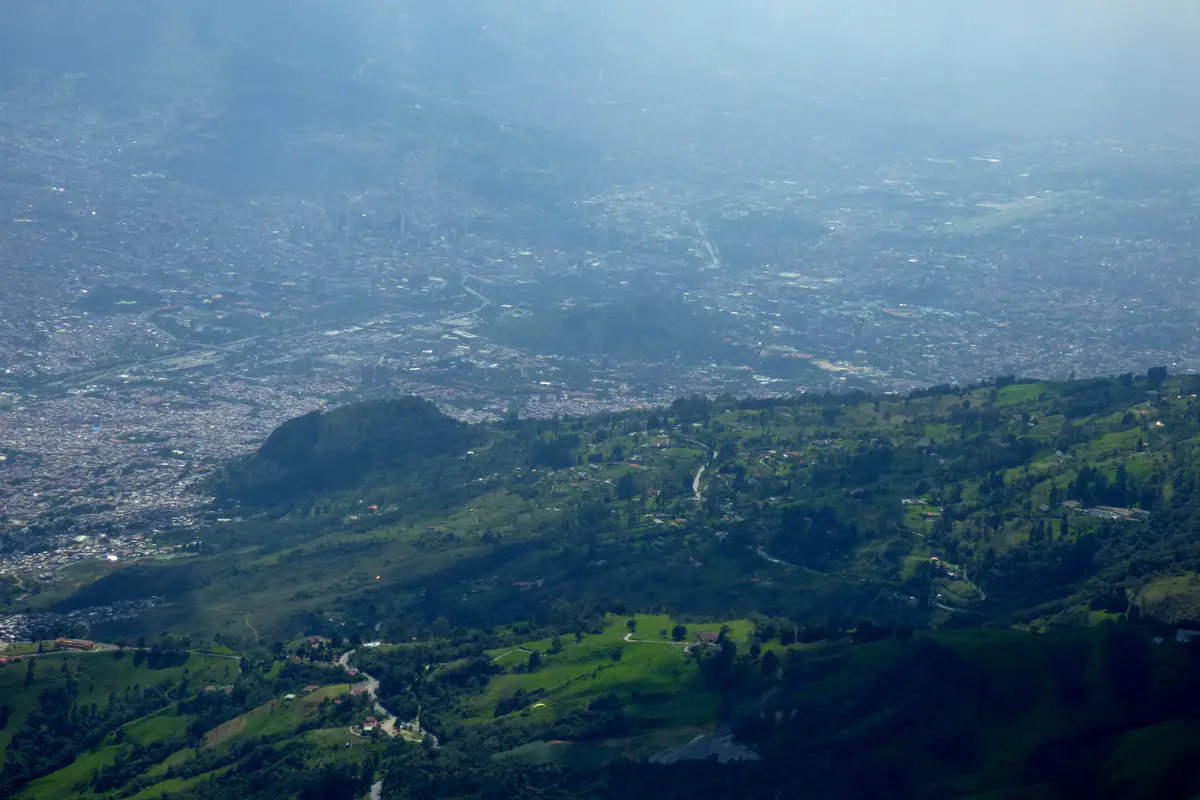
Medellín from Cerro El Picacho · destination photo (Luis90f, CC BY-SA 4.0)
Discover Medellín at another pace. This guide does not try to cover everything. It gathers what we would like you to know when you arrive: what the neighborhood is like, how to get around, where to find the coffee, the art, and the nature, and when to come. The rest you will find on foot.
01 The neighborhood
Laureles–Estadio
Tree-lined streets, neighborhood parks, and everyday life. This is where Bruma Verde is.
- Primer Parque de Laureles A neighborhood park ringed by the circular streets. Good for sitting and watching life go by.
- Segundo Parque de Laureles Another neighborhood meeting point, with cafés and bakeries around it.
- La 70 Carrera 70: restaurants, shops, and the liveliest atmosphere in the neighborhood. Near Estadio station (Line B).
- Unidad Deportiva Atanasio Girardot The stadium and other sports venues, with people jogging and training at all hours. Estadio station (Line B).
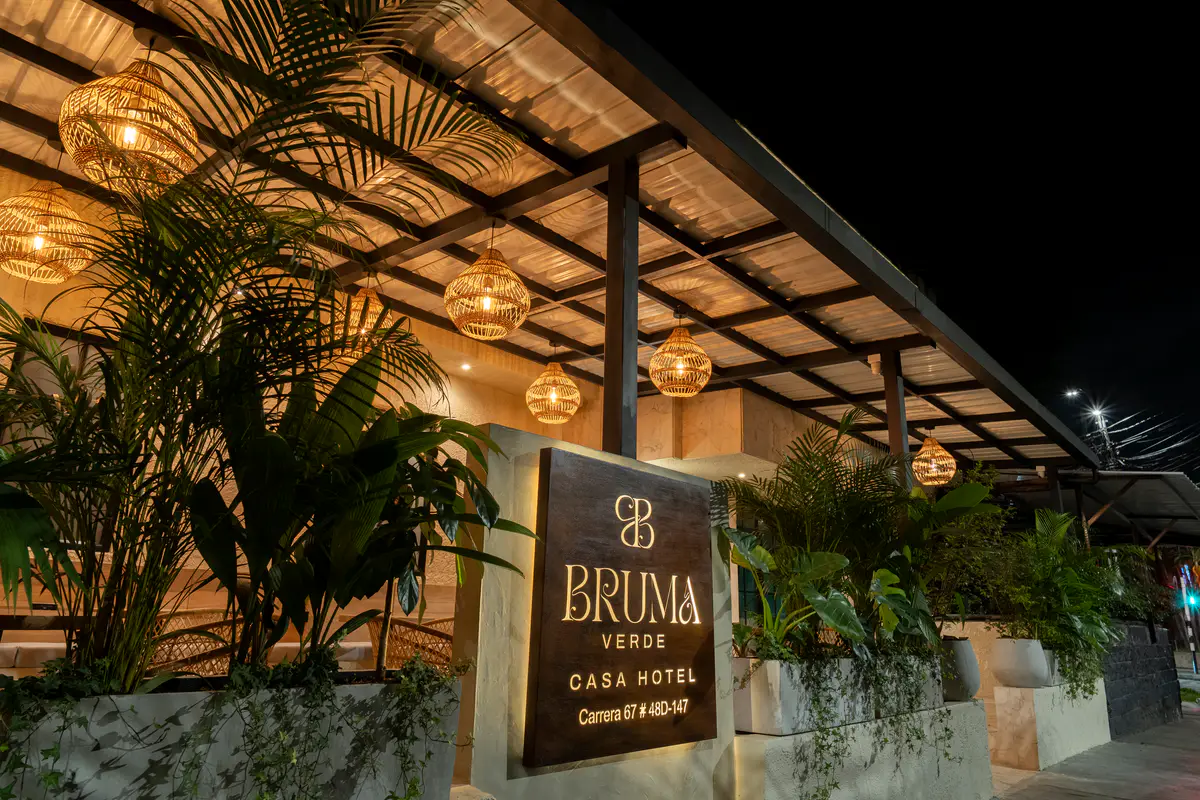
Bruma Verde is at Carrera 67 #48D-147, in Laureles–Estadio, west of the Medellín River. It is a flat, leafy residential neighborhood known for its circular streets that wrap around the parks. Life here moves at a different pace from the city’s party districts: there are shops, restaurants, and bustle, but also quiet nights.
The hotel’s guide describes it as "well connected by metro, minutes from the best specialty coffee shops". Suramericana station on Line B is close to the house, and Estadio station, according to the same guide, is "just a few minutes away".
The name Estadio comes from the Unidad Deportiva Atanasio Girardot, a large sports complex with the city’s football stadium, arenas, and tracks. Alongside it runs La 70, a lively street of restaurants and shops. Further in, the Laureles parks gather neighbors, dogs, and bench-side conversations.
It is a neighborhood for walking without a map. The curving streets are a little disorienting at first, and that is part of the charm.
02 Getting around
Metro, cable cars, and streets
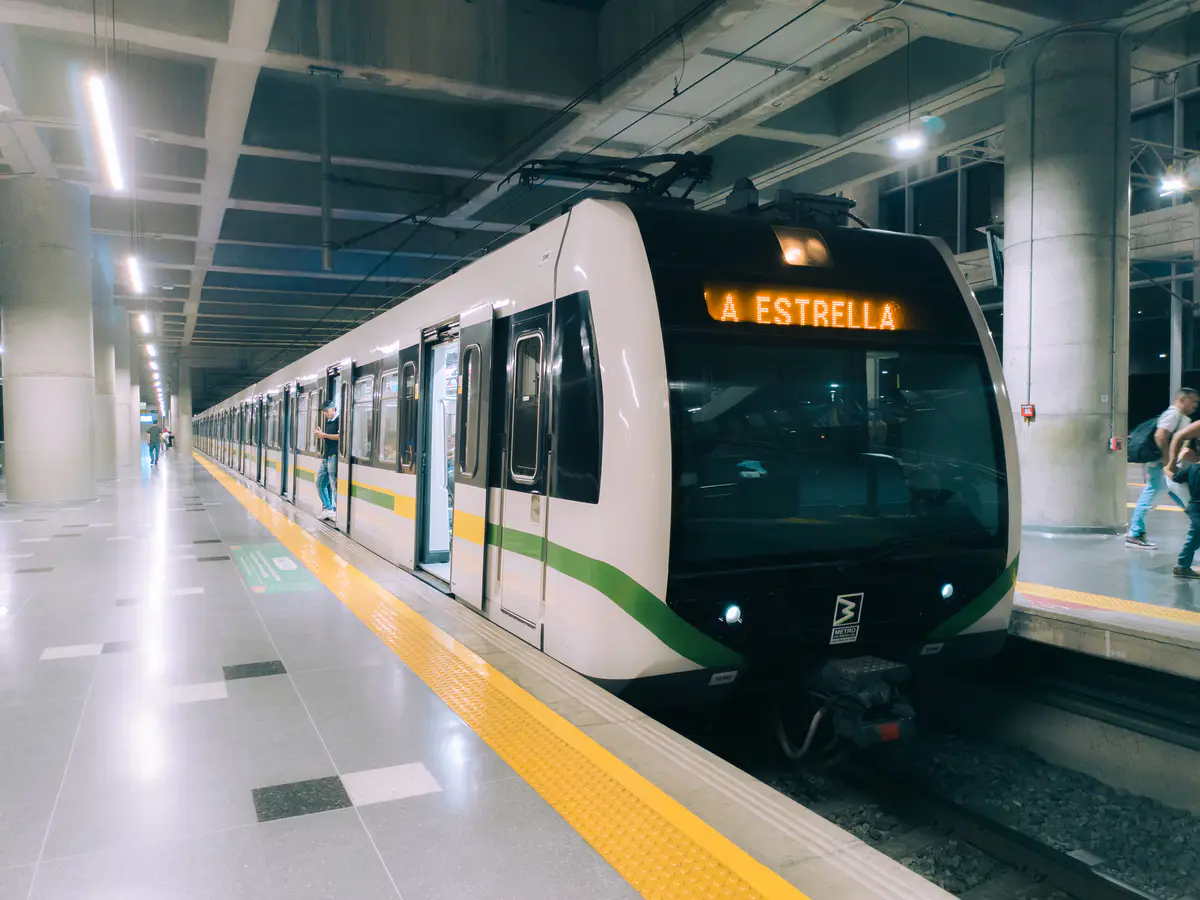
From Laureles, metro Line B takes you downtown or to Comuna 13 with no fuss.
- Estación Suramericana The Line B station near Bruma Verde.
- Estación Estadio Line B, next to the Unidad Deportiva Atanasio Girardot.
- Estación San Antonio The end of Line B downtown, and the transfer to Line A.
- Estación San Javier The western end of Line B and gateway to Comuna 13, with a Metrocable connection.
The metro is the city’s pride: clean, simple, and the most comfortable way to cross the valley. From Laureles, Line B is the one you want. Suramericana and Estadio stations are both in the neighborhood.
Eastbound, Line B ends at San Antonio downtown, where it connects with Line A. From there, one stop north is Parque Berrío, the closest station to Plaza Botero. Further north is Universidad, for the Jardín Botánico and Parque Explora.
Westbound, Line B reaches San Javier, the gateway to Comuna 13. A Metrocable line also starts there. The Metrocable lines are cable cars that climb to hillside neighborhoods and are part of the metro system. Beyond getting you around, they offer some of the best views of the valley.
To ride, you can buy tickets at the stations or use the Cívica card, the system’s rechargeable card. For door-to-door trips, especially at night, taxis and ride-hailing apps are a good option. Reception can help you call one.
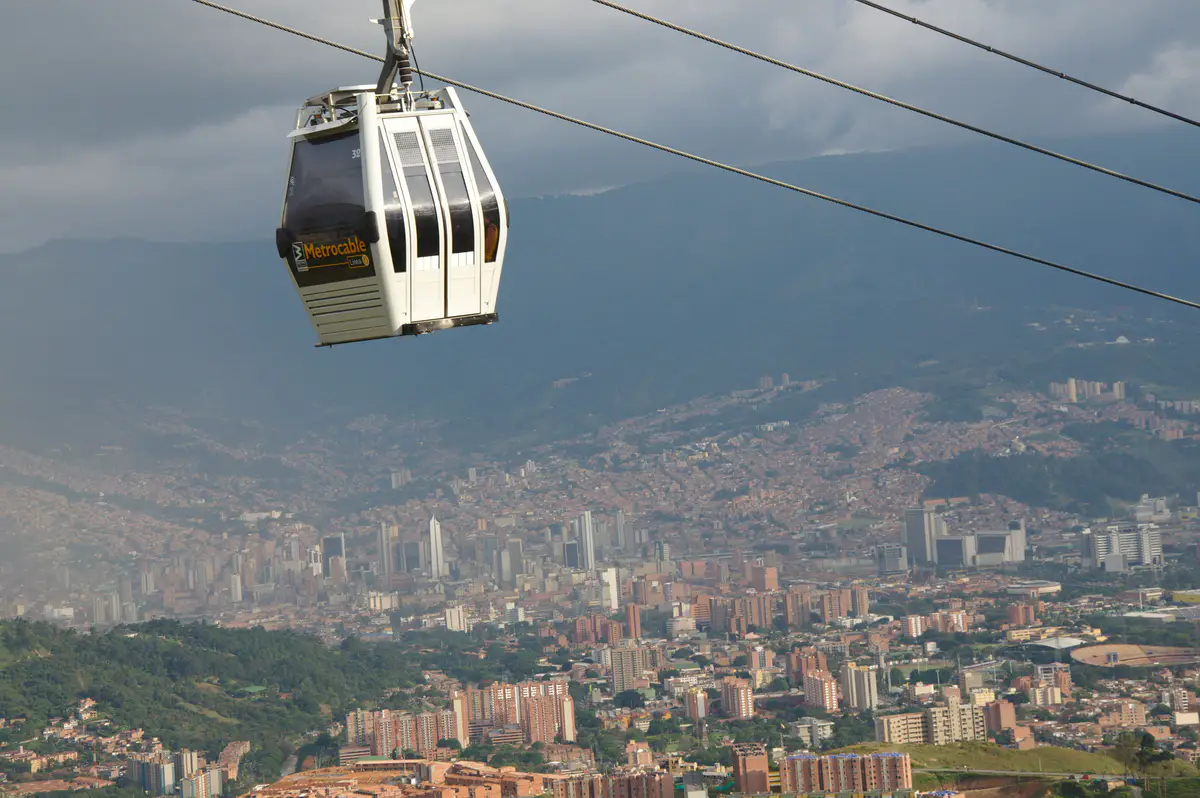
Destination photo · JoranL · CC BY-SA 4.0 · Wikimedia Commons
03 Coffee
From tinto to specialty cup
In Antioquia, coffee is habit, conversation, and landscape.
- Tinto de esquina The city’s most everyday coffee, found in shops and bakeries in any neighborhood.
- Cafés de especialidad en Laureles The neighborhood has several. Walk into whichever appeals and order a pour-over.
- Tour del Café A visit to coffee farms to follow the process from plant to cup. Arranged with the team.
Antioquia is coffee country. The mountains around the city have been farmed for generations, and coffee is as much a part of paisa identity as arepas or music. People drink it at all hours, and almost always in company.
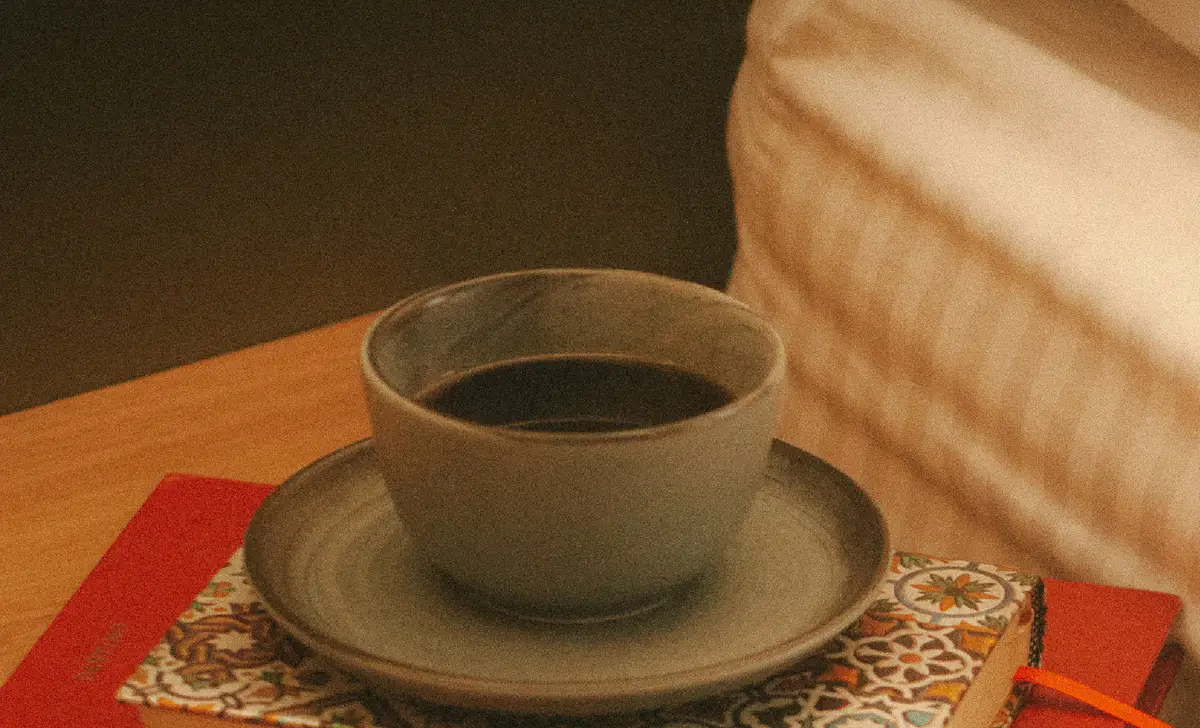
The starting point is the tinto: a small black coffee served in shops, bakeries, and on street corners. It is cheap, quick, and social. Ordering a tinto is also a way of sitting down to talk.
Alongside that tradition, a specialty coffee scene has grown, with baristas who talk about origin, variety, and processing, and methods like pour-over or French press. Laureles is one of the neighborhoods where you can feel that scene: the hotel’s guide describes it as "minutes from the best specialty coffee shops".
If you want to go to the source, the Coffee Tour visits coffee farms to see the whole process: harvesting, processing, drying, and roasting. And at the house, Bruma Verde’s Coffee Corner is open all day.
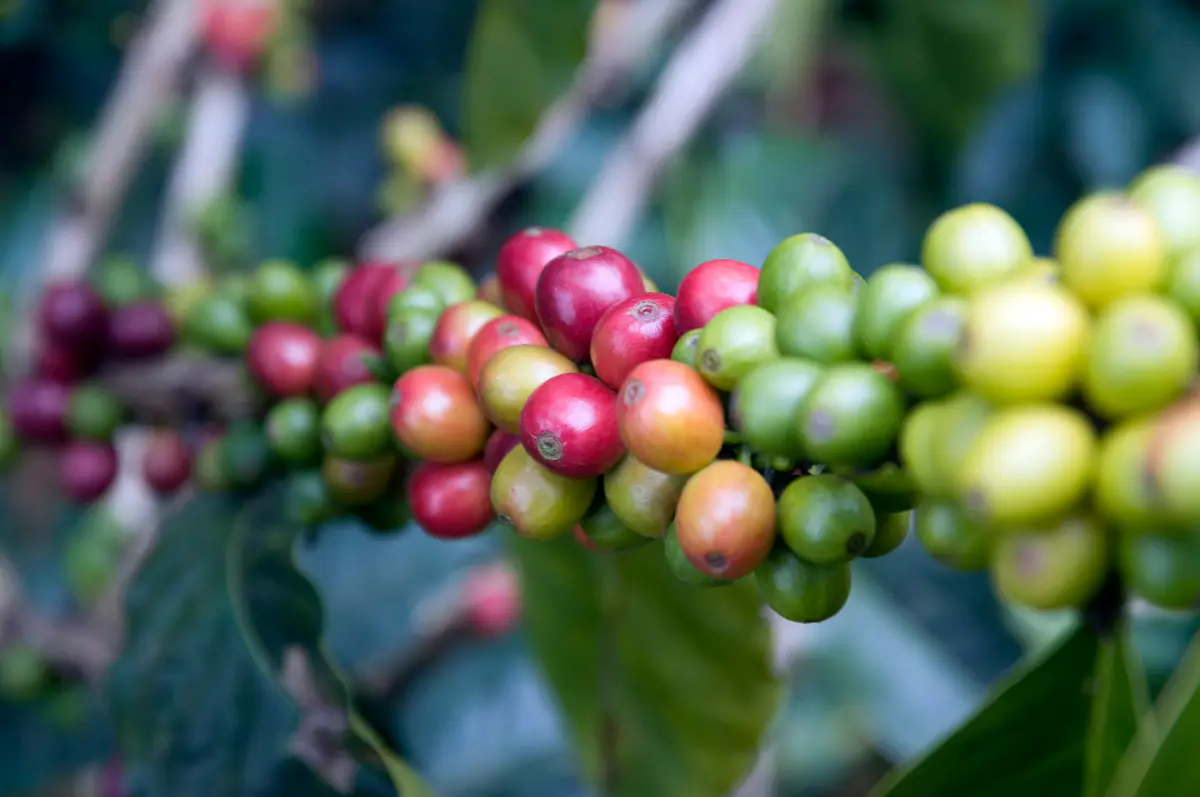
Destination photo · CIAT (Neil Palmer) · CC BY-SA 2.0 · Wikimedia Commons
04 Art and memory
From downtown to Comuna 13
Sculptures, museums, and painted walls: Medellín’s art tells its story.
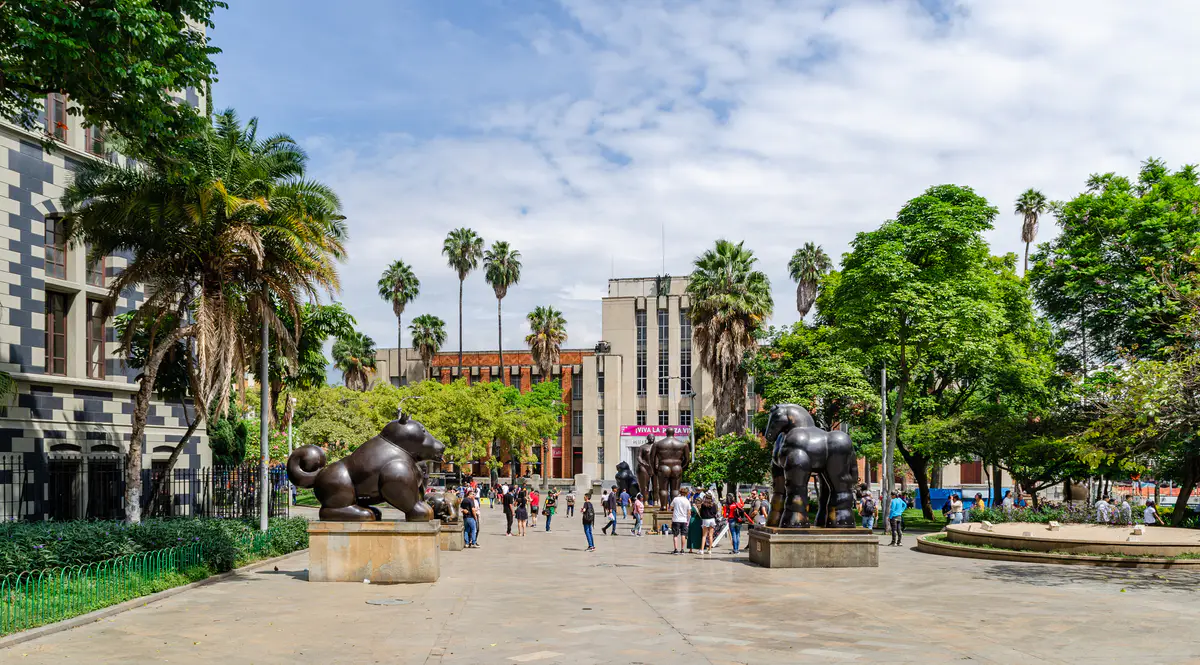
- Plaza Botero Fernando Botero’s bronze sculptures in the open air. Parque Berrío station (Line A).
- Museo de Antioquia Work by Botero and other Colombian artists, beside the square. Parque Berrío station (Line A).
- Palacio de la Cultura Rafael Uribe Uribe A Gothic Revival building with a two-tone facade, facing Plaza Botero. Parque Berrío station (Line A).
- Comuna 13 Murals, hip hop, and open-air escalators. Best with local guides. San Javier station (Line B).
Downtown, Plaza Botero is an open-air museum. According to the hotel’s guide, it holds "23 bronze sculptures" that Fernando Botero donated to Medellín, his hometown. The rounded figures share the square with vendors, pigeons, and passersby.
On one side stands the Museo de Antioquia, with a major room devoted to Botero and work by other Colombian artists. Across from it rises the Palacio de la Cultura Rafael Uribe Uribe, a Gothic Revival building with a two-tone stone facade, its corridors full of light inside.
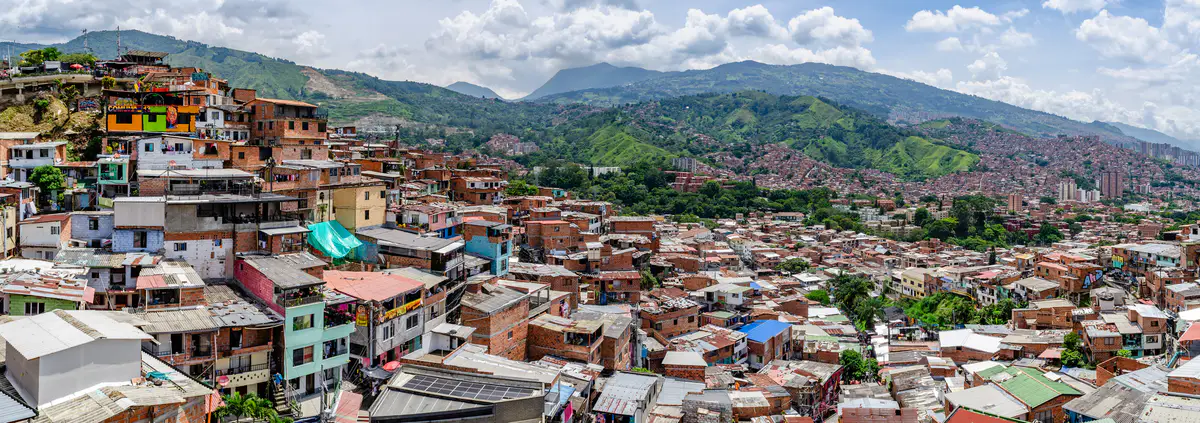
To the west, Comuna 13 tells a different story. For years it was one of the neighborhoods hit hardest by violence. Today it is known for how the community transformed its space through graffiti, hip hop, and open-air escalators. It is a place of memory, best visited with respect and, if you can, with local guides.
Seeing both on the same day helps you read the city: the official history downtown, and the history told by the neighborhood on the hillside.
Destination photo · Steffen Schmitz · CC BY-SA 4.0 · Wikimedia Commons
Destination photo · Steffen Schmitz · CC BY-SA 4.0 · Wikimedia Commons
05 Nature
Green in and around the city
Mountains all around, gardens within, and water a few hours away.
- Jardín Botánico de Medellín Paths, plants, and the Orquideorama, right in the city. Universidad station (Line A).
- Parque Explora An interactive science museum with an aquarium, next to the Jardín Botánico. Universidad station (Line A).
- Guatapé y la Piedra del Peñol Reservoir, islands, the great rock, and the town of zócalos. A full day.
Medellín sits in a valley ringed by mountains, and green is visible from almost anywhere. That is where the house got its name. Bruma Verde comes from "the soft mist that covers the mountains in the morning and the green that restores balance".
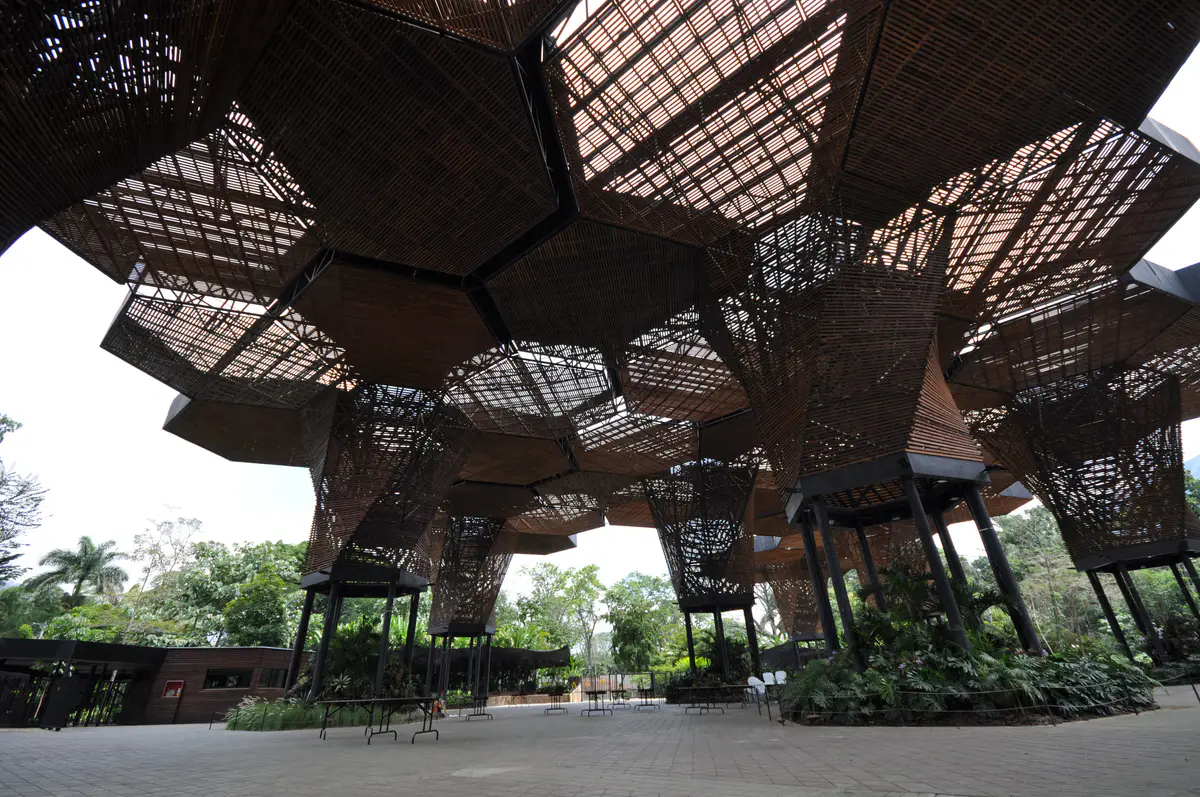
In the city, the Jardín Botánico is a good refuge. It has paths, plant collections, and a pond, and inside it stands the Orquideorama, a timber structure of modules that open like flowers or tree canopies. Exhibitions are held in its shade, and it is a fine place for a slow walk. It is near Universidad station on Line A, next to Parque Explora.
Outside the city, the classic outing is Guatapé. The Peñol-Guatapé reservoir is a landscape of water, islands, and mountains, and the Piedra del Peñol gives the widest view of all, once you have climbed its steps. It takes a full day, best kept free of other plans.
And if you only have an afternoon, sometimes it is enough to look up: the mountains change color with the light.
Destination photo · Jorge Láscar · CC BY-SA 3.0 · Wikimedia Commons
Destination photo · Alejandro Bayer Tamayo · CC BY-SA 2.0 · Wikimedia Commons
06 When to come
The city of eternal spring
Mild weather all year, with wetter and drier seasons.
- Feria de las Flores In August, with the silleteros parade.
- Alumbrado navideño Christmas lights in streets and parks throughout December.
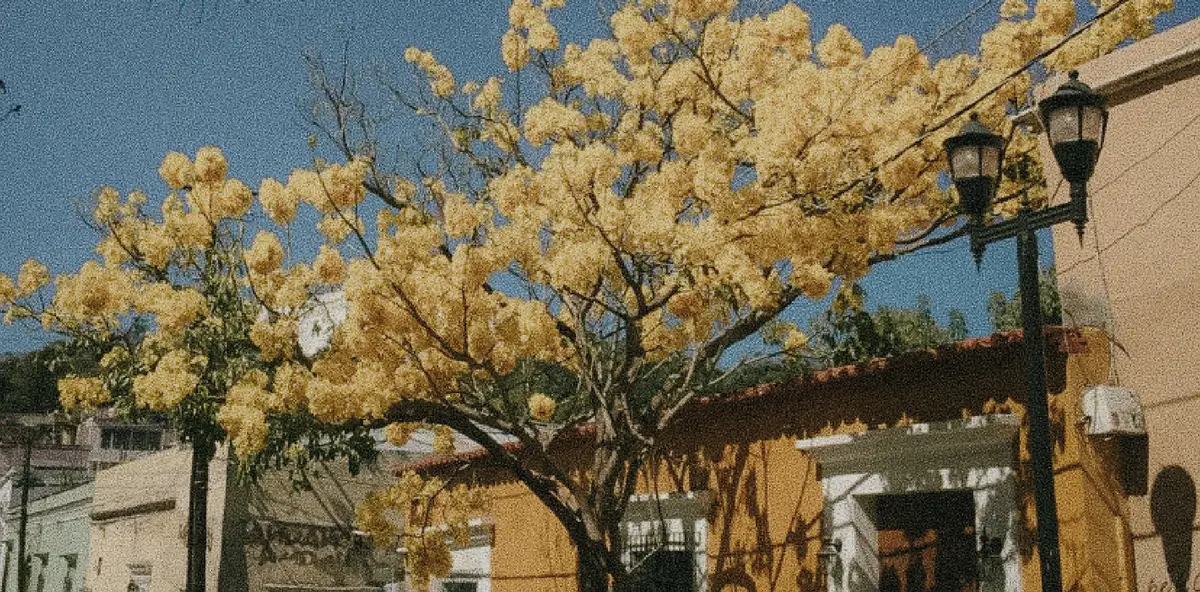
Medellín is called "the city of eternal spring", and the nickname is earned. According to the hotel’s guide, temperatures range from 18 °C to 28 °C all year. Mornings tend to be cool, middays warm, and evenings pleasant.
There is no clear winter or summer as in other latitudes, just wetter and drier seasons. The hotel’s guide names December–January and July–August as the drier months. Even so, afternoon showers are common at any time of year: they tend to be heavy and pass quickly.
In August, the city celebrates the Feria de las Flores. Its best-known moment is the silleteros parade, in which farmers carry large flower arrangements on their backs, mounted on wooden frames. It is a much-loved tradition, and the city fills with visitors.
In December, the Christmas lights brighten streets and parks. Any time works. What matters is bringing light layers, something for the rain, and a willingness to walk.
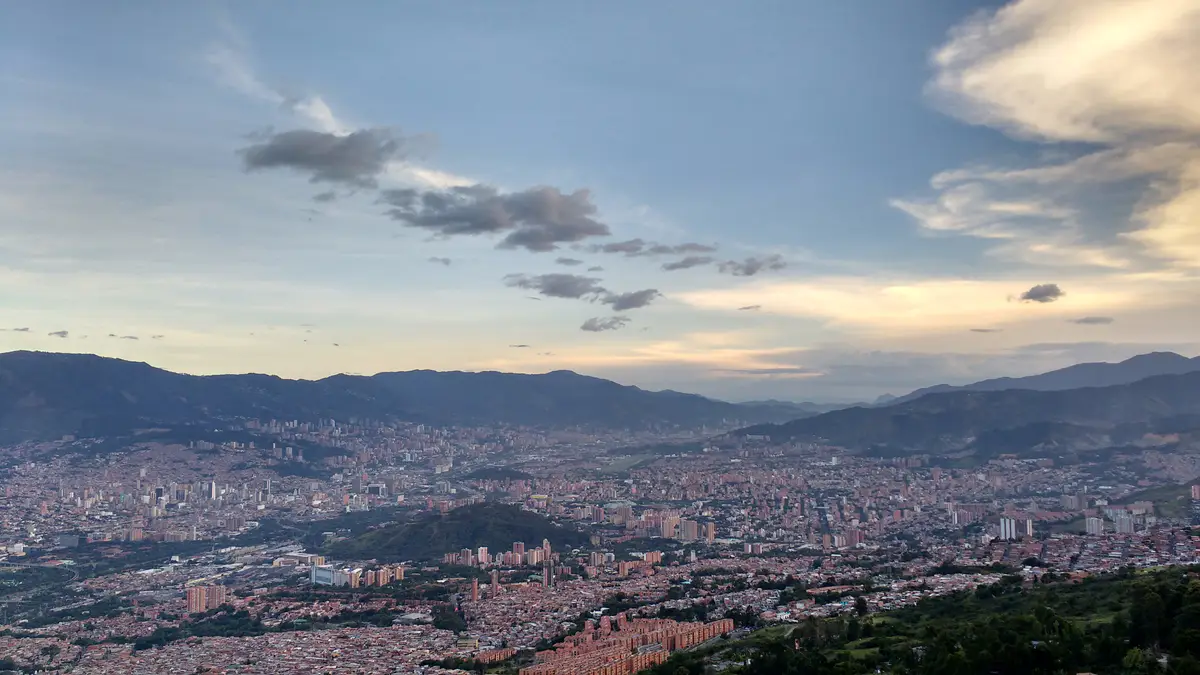
Destination photo · Luis90f · CC BY-SA 4.0 · Wikimedia Commons
To read slowly
Journal Bruma Journal Medellín, unhurried 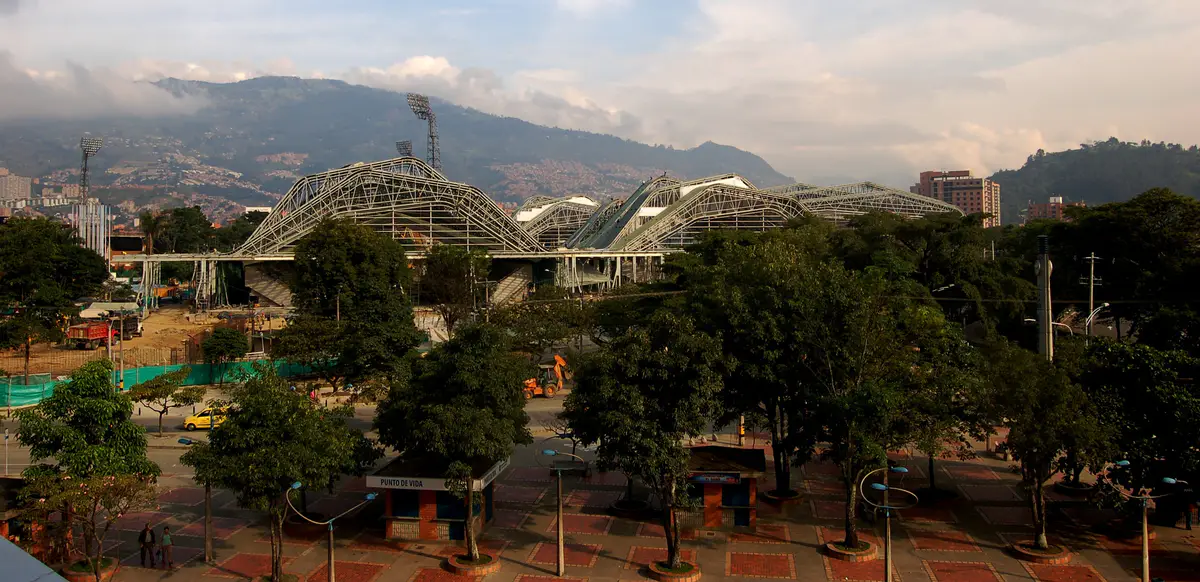 Bruma Journal A day in Laureles Bruma Journal Coffee, art, and small discoveries Bruma Journal Medellín in three days
And if you want to leave the city: Coffee Tour · Comuna 13 · Guatapé & Piedra del Peñol · Hacienda Nápoles